Wednesday, September 24, 2008

Yttrium -- #39 & Catalyst(s)!

Yttrium:

Although I chose to research Yttrium based on my lack of knowledge about it, as it turns out, it's more pervasive in our culture than I had known. This transition metal has a silvery white luster, but is possibly most commonly experienced in its application for making the red components of cathode ray tube television displays.
Besides bringing 1/3 of TV images to the planet, uses of Yttrium range from cancer treatment, to laser and LED production, to the creation of synthetic garnet (which happens to be my birthstone) and use in semiconductors.
Yttrium is not present in a pure state on Earth, but does appear with great frequency in rare metals, and with greater abundance in samples from the Moon than in our terrestrial surface.
The element is named for the town nearest the locus of its first discovery, Ytterby, Sweden where it was first found in 1787.

Catalyst(s)!


In researching catalysts, I came upon a topic that interested me right away - natural gas production. It turns out that several petro-fuel alternatives are produced through a process named for two scientists: Fischer and Tropsch. Several catalysts are used in the process, including Cobalt, Ruthenium, and Iron. Nickel is used when the desired gas is methane.

The Fischer-Tropsch synthesis names both the combustion of hydrocarbons, and the gasification of natural gas, coal or other biomass. The synthetic fuel produced by the Fischer-Tropsch process can be used to power diesel vehicles.

This site is a compendium of links if you'd like to learn more about the bio-fuel synthesis process


Thursday, September 18, 2008

Purdue's Elements, Compounds & Mixtures

I found this site useful for several reasons:

  • Seems to be a great introduction to the material, appropriate for kids or adults
  • In place of flash cards, the concise explanations serve as reminders & save paper
  • The animations are eye-catching, but also provide visual distinction

Also, the Purdue Chemistry Department website has some pretty interesting material if you just poke around a bit.

O-zone Discussion


"I never really hear about o-zone anymore. Remember when you'd always hear about CFCs and hairspray?"

My mother was mildly surprised to hear about the aspect of the o-zone problem I'd come to think of as a little like nuclear fall-out; after the precipitating incident (or decades thereof) the trouble has compounded, and the future of the complications might be worse than predicted.

It seems that keeping environmental issues in perspective is difficult for folks in the era of soundbites and catch-phrases.


Specialization within the scientific community is necessary, to a certain extent, but particularly when it comes to presenting global problems to "laypeople," some level of consilience seems wanting. Although the book (cover at right) doesn't focus much on chemistry, E.O. Wilson writes eloquently about the need, in an age of ever more specific specialization, for synthesis among academic disciplines.
I think of TCM doctors as facilitators for consilience within health-care; there must be a way to move between aspects of health without compromising treatment. This tactic could be helpfully employed in terms of public education and awareness of climate issues. Today the popular terms are (according to informal polling over the course of the week) GLOBAL WARMING, CLIMATE CHANGE, GREENING, CARBON-FOOTPRINT, and that's about it. How about linking the problems we talked about in the previous decades, in order to build a coherent narrative and thence begin working towards ameliorating the situation?

Wednesday, September 17, 2008

Cu -- #29


Atomic Number: 29
Atomic Weight: 63.546
Melting Point: 1357.77 K (1084.62°C or 1984.32°F)
Boiling Point: 2835 K (2562°C or 4644°F)
Density: 8.933 grams per cubic centimeter
Phase at Room Temperature: Solid
Element Classification: Metal
Period Number: 4


Although it's been used by humans for over 10,000 years, it was during the height of the Roman Empire that the Metal of Cyprium (Cyprus) was given the name we all know and love today: Cuprum. Well, maybe that's not the name by which it's known today, but Cu (element 29) became known as Copper, which ought to indeed sound familiar.

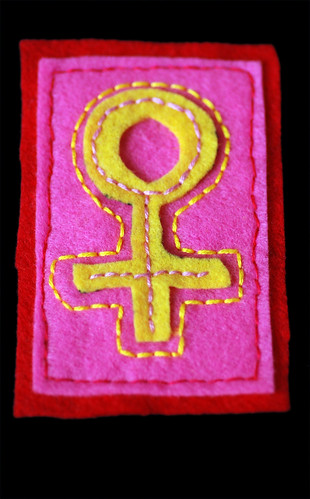
Most metals are silvery white, but the pinkish luster of copper has a pulchritude all its own. Copper has long been associated with beauty, having once been a popular material for mirror-making, which may be related to its alchemical symbol shared in common with the goddess/planet Venus. The symbol may be derived from a stylized mirror, which seems appropriate all around.


Copper serves as an excellent conductor of electricity, second only to silver. Demand for copper in construction and electronics has increased dramatically since 2000, and prices have skyrocketed. Besides use of the unadulterated element (which develops an attractive green patina) humans also often combine copper with tin to form the alloy, bronze, and with zinc to form brass. The precious metal is refined from several ores: cuprite (CuO2), tenorite (CuO), malachite (CuO3·Cu(OH)2), chalcocite (Cu2S), covellite (CuS) and bornite (Cu6FeS4), and is primarily mined today in the United States, Chile, Zambia, Zaire, Peru and Canada

More info:

Tuesday, September 9, 2008

Of course chocolate = love... right?


As far as the quiz was concerned, #3: "Black coffee = homogeneous, but not pure..." tripped me up, but perhaps I was overly skeptical; I thought it was a trick! It did not occur to me at first that a mixture could be homogeneous and not pure, as I thought homogeneity being evenly distributed molecules sort of indicated purity. The quiz was great help for this kind of distinction.

In natural science, which I have not studied since high school (not too long ago, really - 1999-2003) words have specific and nuanced definitions that may be a bit different from the way I've been accustomed to using them, and it's good to start out laying everything on the table in terms of what is meant in using specific terms.

My favorite moment of reading the Chemistry Definitions website was the first anecdote about phenylethanol in roses and phenylethylamine in the human response to being in love!

It seems to me that "convenient" or "coincidental" discoveries like this shock Western science (or at least are presented as astounding in media reports) when they are much less riveting in Chinese Medicine, being a tradition steeped in metaphor, with correlations like the 5 elements being associated with senses, flavors, colors, directions, etc. Of course everything that seems related is truly, actually, essentially associated! It is, on the other hand, truly exciting to find Western Scientific Discoveries supporting observations humans have made over the millennia.